
Reegalbook

Blog

Your blog category

Blog

5 THINGS EVERY STUDENT SHOULD WRITE DOWN BEFORE LEAVING CLASS

5 THINGS EVERY STUDENT SHOULD WRITE DOWN BEFORE LEAVING CLASS Taking notes in class is not just about copying everything from the board. The right notes help students remember important information and prepare better for homework and exams. Before leaving the classroom, students should make sure they have written down a few key things. A good Reegal Notebook can make this simple, organized, and easy to review later. 1. IMPORTANT TOPICS AND KEY POINTS Write down the main topics discussed during the class. Include important definitions, formulas, facts, or concepts that the teacher explains. These points can help you quickly revise the lesson later. Keeping them organized in your notebook also makes exam preparation easier. 2. HOMEWORK AND CLASSWORK Before leaving class, check whether the teacher has given any homework or classwork. Write the task clearly in your Reegal Notebook so you do not forget it later. If there is a submission date, note that down as well. This simple habit can help students stay organized and complete their work on time. 3. IMPORTANT QUESTIONS Write down any questions you could not understand during the lesson. You can ask your teacher about them before the next class or discuss them while revising. Keeping these questions in your notebook prevents small doubts from becoming bigger learning gaps. It also encourages students to become more active and confident learners. 4. IMPORTANT DATES AND DEADLINES Students often have tests, projects, assignments, and activities to remember. Writing important dates in a Reegal Notebook helps keep all these deadlines in one place. Add test dates, project submissions, presentations, and other important school activities. Checking these notes regularly can help students plan their study time better. 5. WHAT TO REVISE BEFORE THE NEXT CLASS Before leaving the classroom, write down the topic or chapter you should revise. Even a short note about what was taught can make the next revision session easier. Use your notebook to record any pages, exercises, or concepts that need another look. This small step can help turn everyday classroom notes into useful study material. MAKE EVERY NOTE COUNT WITH REEGAL NOTEBOOK A good notebook is more than a place to write; it becomes a useful learning companion for students throughout the academic year. Reegal Notebook offers notebooks designed for different academic needs, including ruled, grid, and unruled formats. Choosing the right notebook for each subject can help students keep their notes clear, organized, and easy to review. With Reegal Notebook, write it down, stay organized, and make every class count.


Blog

RULED, UNRULED, GRID: WHICH NOTEBOOK DOES YOUR CHILD ACTUALLY NEED?

RULED, UNRULED, GRID: WHICH NOTEBOOK DOES YOUR CHILD ACTUALLY NEED? You’re standing at the stationery counter with the school list in hand, and it just says “notebooks.” Nobody tells you which kind. The four-line one looks like it’s for someone much younger. The plain one has no lines at all. Is that even useful? The grid one looks like it belongs in a math class; you’re not sure your child is in it yet. There isn’t one “correct” notebook; only the one that matches what your child is actually writing and how old they are while writing it. Here’s how to stop guessing at the shelf and pick with confidence. THE RULING TYPES, IN PLAIN TERMS Four-line ruled has extra guide lines built in; it’s for children who are still learning where letters start, end, and sit on the line. Single-line ruled is the standard format most students move to once handwriting is settled: one set of lines and nothing else. Grid ruled swaps lines for small squares built for math, geometry, and anything that needs to line up visually. Unruled is a blank page, no structure at all meant for drawing, diagrams, and subjects where a straight line would only get in the way. WHO EACH ONE ACTUALLY SUIT If your child is just starting school, four-line notebooks do the heavy lifting; the extra guidelines are what teach consistent letter height, not just practice. If they’ve moved past early handwriting, single-line is the everyday default for most subjects language, history, and general notes. Keep a grid notebook alongside it the moment math starts involving graphs or geometry. And once art, diagrams, or science sketches enter the picture, a plain unruled notebook earns its place too. QUICK DECISION GUIDE Ask yourself one question: what is this notebook actually going to be used for most days? Still learning to write neatly → four lines. Everyday subject notes → single line. Math, geometry, graphs → grid. Drawing, diagrams, free sketching → unruled. If the honest answer is “more than one of these,” don’t force a single notebook to cover it all. Buy the two that match what they’re actually doing in class. WHAT ELSE TO CHECK BEFORE YOU BUY Ruling type isn’t the only thing worth a second look. Paper thickness (GSM) decides whether ink bleeds through to the next page—this matters more for younger kids who tend to press harder. Binding decides whether the notebook survives a full year in a school bag without pages coming loose. And page count decides whether you’re back at the shop mid-term hunting for the exact same notebook again. REEGAL NOTEBOOKS, BY TYPE Reegal makes all of it four-line notebooks for early writers, single-line for everyday subject notes, grid notebooks for math and geometry, and unruled notebooks for drawing and diagrams, all built with paper and binding that hold up through the full academic year. Rather than guessing at the shelf, pick the ruling for the subject and let the notebook do its job. Browse the full range at ReegalBook.com.

Blog

LONG BOOK VS A4 VS A5: WHICH ONE SHOULD YOU ACTUALLY BUY?

LONG BOOK VS A4 VS A5: WHICH ONE SHOULD YOU ACTUALLY BUY? You’re standing in front of a shelf of notebooks, and every one of them claims to be “the one.” A Long book looks like it’ll hold everything you write for a whole term. The A4 next to it looks serious, almost like an office issue. The A5 feels light enough to forget it’s even in your bag.your child is in it yet. There isn’t a “best” notebook size; it’s only the size that matches how you actually write, carry, and use one day to day. Here’s how to stop guessing and pick the one that fits your life. THE THREE FORMATS, IN PLAIN TERMS Long Book is the tall, narrow format you’ll recognize from Indian and South Asian schools and offices, roughly 8.5 x 14 in. It’s built for people who write a lot in one sitting: long answers, records, and continuous notes that don’t want to be broken up by frequent page turns. A4 follows the international paper standard of 210 x 297 mm, the same size as a printed page. A5 is A4 folded in half 148 x 210 mm, the size built for movement, the notebook you actually remember to bring because it doesn’t feel like carrying a second bag. WHO EACH ONE ACTUALLY SUIT If you’re a student, it depends on what you’re studying, not what year you’re in. Long written answers are easier in a Long book with no flipping mid-thought. Structured, detailed notes you’ll cross-reference with printed material do better in A4. Quick notes between classes? That’s what A5 is for. If you’re working, A4 is the default; your notes match everything else on your desk. Keep an A5 alongside it for quick calls and running to-do lists. If you’re commuting or journaling, A5 wins on portability, full stop. QUICK DECISION GUIDE Ask yourself one question: what am I actually going to do with this notebook most often? unruled. Long, continuous answers or records → Long Book. Detailed, structured notes that need to match printed pages → A4. Carrying it everywhere, writing in short bursts → A5. If the honest answer is “a bit of everything,” don’t force one notebook to do all three jobs. Buy the two that match your two most common situations. WHAT ELSE TO CHECK BEFORE YOU BUY Ruling type isn’t the only thing worth a second look. Paper thickness (GSM) decides whether ink bleeds through to the next page—this matters more for younger kids who tend to press harder. Binding decides whether the notebook survives a full year in a school bag without pages coming loose. And page count decides whether you’re back at the shop mid-term hunting for the exact same notebook again. REEGAL NOTEBOOKS, BY format Reegal makes all three Long Books for extended writing and records, A4 notebooks for structured, document-ready notes, and A5 notebooks for the notes you take on the move. Rather than settling for one all-purpose size, pick the format for the job and let the notebook actually work for you. Browse the full range at ReegalBook.com.

Blog

How Top Students Take Notes (And Why Most Students Do It Wrong)

How Top Students Take Notes (And Why Most Students Do It Wrong) In every classroom, some students consistently perform better than others. While many assume it’s because they are naturally smarter, the real difference often lies in their study habits—especially how they take notes. Most students believe that writing down everything the teacher says is the best approach. However, this method usually creates long, unorganized notes that are difficult to revise. The key difference is not how much you write, but how effectively you capture information. The Mistake Most Students Make A large number of students treat note-taking as a copying exercise. They focus on writing quickly instead of understanding the concept. This leads to: Overloaded notebooks with unnecessary details Confusion during revision Difficulty identifying important topics Such notes often do more harm than good when exams approach. What Top Students Do Differently Top-performing students approach note-taking as an active process. They think, filter, and organise information while writing. This openness allows the mind to think freely. Many individuals find that their ideas flow better when they begin writing in a fresh notebook, as it removes the clutter—both physical and mental—associated with previously used pages. Building Better Habits Starting a new notebook often leads to better organization and consistency. People tend to write more neatly, structure their thoughts clearly, and maintain continuity in their work. This is because the beginning sets a tone—one that motivates individuals to maintain quality throughout. For students, professionals, and creators alike, this can translate into improved productivity and more effective documentation of ideas. A Personal Connection Unlike digital tools, a notebook creates a tangible connection between thoughts and expression. Every word written feels intentional. Over time, the notebook becomes a reflection of progress, growth, and effort. The first page, in particular, holds emotional value. It often captures the mindset at the start of a journey—whether it is ambition, curiosity, or determination. Looking back at it later can be both grounding and inspiring. Why It Matters In a fast-paced digital world, the simple act of writing in a notebook offers a moment of pause. It encourages mindfulness and focus. The first page feeling is not just about stationery—it is about mindset. It reminds us that every new beginning, no matter how small, carries the potential for something meaningful. Start Strong The next time you open a new notebook, take a moment before writing that first word. Think about what you want it to represent—your goals, your ideas, or your journey ahead. Because sometimes, all it takes is a single blank page to start something remarkable.

Blog

The First Page Feeling: Why a New Notebook Feels Like a Fresh Start

The First Page Feeling: Why a New Notebook Feels Like a Fresh Start There is something uniquely powerful about opening a new notebook for the very first time. The untouched pages, the subtle scent of fresh paper, and the quiet anticipation of what lies ahead create an experience that goes far beyond stationery. It represents possibility, clarity, and a renewed sense of purpose. A Symbol of New Beginnings A new notebook is more than just blank pages—it is a psychological reset. Much like the start of a new year or a new project, it gives you permission to begin again. Past mistakes, incomplete tasks, and scattered thoughts are left behind. What remains is a clean slate, ready to be shaped with intention and focus. This “first page feeling” often inspires people to set clearer goals, write more thoughtfully, and approach their work with a sense of discipline. It is not just about writing—it is about starting right. The Power of a Blank Page Blank pages hold quiet potential. They do not judge, restrict, or limit ideas. Instead, they invite creativity. Whether it is notes, sketches, plans, or reflections, a new notebook encourages expression without hesitation. This openness allows the mind to think freely. Many individuals find that their ideas flow better when they begin writing in a fresh notebook, as it removes the clutter—both physical and mental—associated with previously used pages. Building Better Habits Starting a new notebook often leads to better organization and consistency. People tend to write more neatly, structure their thoughts clearly, and maintain continuity in their work. This is because the beginning sets a tone—one that motivates individuals to maintain quality throughout. For students, professionals, and creators alike, this can translate into improved productivity and more effective documentation of ideas. A Personal Connection Unlike digital tools, a notebook creates a tangible connection between thoughts and expression. Every word written feels intentional. Over time, the notebook becomes a reflection of progress, growth, and effort. The first page, in particular, holds emotional value. It often captures the mindset at the start of a journey—whether it is ambition, curiosity, or determination. Looking back at it later can be both grounding and inspiring. Why It Matters In a fast-paced digital world, the simple act of writing in a notebook offers a moment of pause. It encourages mindfulness and focus. The first page feeling is not just about stationery—it is about mindset. It reminds us that every new beginning, no matter how small, carries the potential for something meaningful. Start Strong The next time you open a new notebook, take a moment before writing that first word. Think about what you want it to represent—your goals, your ideas, or your journey ahead. Because sometimes, all it takes is a single blank page to start something remarkable.

Blog

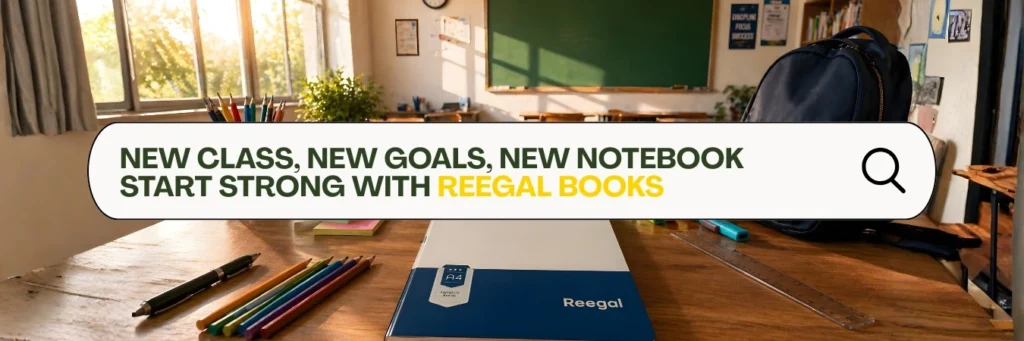
New Class, New Goals, New Notebook Start Strong with Reegal Books

New Class, New Goals, New Notebook – Start Strong with Reegal Books. A new academic year is more than just a change in timetable—it is a fresh opportunity to reset, refocus, and redefine your goals. Every new class brings with it higher expectations, new challenges, and the chance to perform better than before. At the heart of this fresh start lies a simple yet powerful tool: a new notebook. The Psychology of a Fresh Start There is something uniquely motivating about opening a brand-new notebook. The crisp pages, the clean lines, and the untouched space create a sense of possibility. It signals a fresh beginning—a blank canvas where ideas can take shape, plans can be structured, and goals can be achieved. This “first page feeling” is not just emotional; it is deeply psychological. It encourages clarity, discipline, and a renewed commitment to doing things better. When students begin with a fresh notebook, they are more likely to stay organized, take neater notes, and approach their studies with a more focused mindset. Setting the Tone for Success The way you start your academic journey often determines how consistently you perform throughout the year. A well-maintained notebook becomes more than just a collection of notes—it becomes a reflection of your dedication. It helps structure your thoughts clearly It improves retention and revision efficiency It builds a habit of discipline and consistency It creates a sense of ownership over your learning Starting strong is not about perfection; it is about intention. And the right tools make that intention easier to sustain. Why Your Choice of Notebook Matters Not all notebooks are created equal. The quality of paper, durability of binding, and overall design play a crucial role in how effectively a student uses it. A thoughtfully designed notebook enhances the writing experience, reduces distractions, and ensures long-term usability. This is where Reegal Books stands apart. Start Your Journey with Reegal Books Reegal Books are crafted with precision, keeping students’ needs at the core. From smooth, high-quality paper to durable binding and thoughtfully designed layouts, every detail is created to support better learning habits. Whether you are setting new academic goals, organizing your daily lessons, or capturing creative ideas, Reegal Books provide the perfect foundation to begin. Make Every Page Count A new class is your chance to do things differently—to be more organized, more focused, and more consistent. And it all begins with that first page. So this academic year, do not just start—start strong. With clear goals, a fresh mindset, and a notebook that keeps up with your ambition. Reegal Books — because every great journey deserves a strong beginning.

Blog

Why Every Serious Student Should Maintain One Thinking Notebook

Why Every Serious Student Should Maintain One Thinking Notebook In today’s competitive academic environment, students are constantly searching for better study techniques, effective note-taking methods, and ways to improve concentration. While digital tools are everywhere, one proven method continues to outperform them quietly: maintaining a Thinking Notebook. This is not a trend. It is a practical, time-tested study habit used by serious students who want clarity, consistency, and long-term academic improvement. What Is a Thinking Notebook? A Thinking Notebook is a dedicated notebook used only for active thinking, not routine writing. Unlike regular class notebooks, it is meant for: Writing concepts in your own words Breaking down difficult topics Clarifying doubts while studying Planning study schedules and priorities Reflecting on mistakes after tests or exams It is personal, ungraded, and pressure-free. That is exactly why it works. Why Every Student Needs a Thinking Notebook Most students rely on memorization. Serious students focus on understanding. A Thinking Notebook bridges this gap by forcing the brain to slow down and process information deeply. When students write to think, not to copy, learning becomes more effective and long-lasting. Key benefits include: Improved concentration during study sessions Better conceptual clarity Stronger memory retention Reduced exam stress Improved problem-solving skills These are not shortcuts. They are fundamentals. Thinking Notebook vs Regular Study Notebook A Thinking Notebook is proactive. You write because your mind demands clarity. A regular notebook is reactive. You write because the syllabus demands it. Regular Notebook Homework-focused Copied content Exam-oriented Short-term use Thinking Notebook Understanding-focused Self-written explanations Learning-oriented Long-term value This difference alone separates average students from serious learners. The Science Behind Writing and Learning Research consistently shows that handwriting activates deeper cognitive processes than typing or passive reading. Writing by hand helps students: Organize thoughts logically Identify gaps in understanding Retain information longer Learn concepts, not just answers A Thinking Notebook turns studying into an active mental exercise, not a mechanical routine. How Serious Students Use a Thinking Notebook Effectively High-performing students do not write everything. They write what matters. Common and effective uses include: Summarizing chapters after completion Creating mind maps and flowcharts Writing doubts before asking teachers Analyzing mistakes after exams Planning weekly and monthly study goals Over time, this notebook becomes a personalized learning guide. Why Using One Dedicated Notebook Matters Using multiple notebooks for thinking defeats the purpose. A single Thinking Notebook builds consistency. It trains the brain to enter a focused mode every time it is opened. This habit develops: Discipline in studying Independent thinking Confidence in learning Clear academic direction Consistency beats intensity every time. Why Notebook Quality Plays a Crucial Role A Thinking Notebook is used regularly and preserved long-term. Poor paper quality, ink bleeding, weak binding, or uncomfortable layouts disrupt focus and break study flow. A well-made notebook supports uninterrupted thinking and smooth writing. Quality stationery is not a luxury for serious students. It is a study tool. How Parents Can Encourage This Habit Parents often focus on tuition, classes, and marks. Very few focus on how a child thinks. Encouraging a Thinking Notebook helps students: Become self-reliant learners Reduce dependency on rote learning Develop structured thinking early This habit benefits students far beyond exams. Final Thoughts Academic success is not about studying longer hours. It is about studying smarter. A Thinking Notebook helps students: Understand instead of memorize Reflect instead of rush Learn instead of panic Every serious student should maintain one. Because clear thinking always leads to better results.

Blog

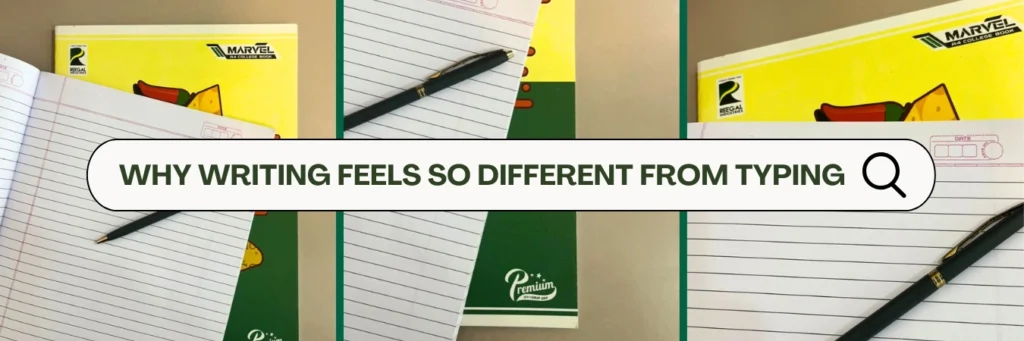
The Psychology of Paper: Why Writing Feels So Different from Typing

The Psychology of Paper: Why Writing Feels So Different from Typing In today’s digital-first world, where every thought is typed, shared, and stored instantly, the gentle sound of a pen gliding across paper feels refreshingly real. Writing by hand has a rhythm that technology simply cannot imitate. It connects the mind, the body, and the page in a creative harmony that nurtures deeper thinking. 🧠 The Science Behind Handwriting and Thought When you write on paper, you don’t just record information — you process it. The movement of your hand across each line activates neural circuits that enhance understanding and long-term memory. This physical engagement triggers creativity and emotional connection in ways that keyboards cannot match. 🎨 Paper as a Creative Medium Typing confines you to structure, but paper sets you free. You can sketch, map out thoughts, or brainstorm spontaneously — no backspace key, no digital boundaries. Each blank page of a Reegal notebook becomes a creative playground where ideas evolve organically. Our thoughtfully crafted paper texture is designed to complement every pen stroke — smooth, balanced, and responsive — giving creators the confidence to explore without limits. 🌿 Reconnecting in a Fast-Paced World Digital tools are convenient, but they often come at the cost of mindfulness. Notifications, alerts, and constant scrolling dilute focus. Writing by hand brings you back to stillness — it’s grounding, personal, and restorative. Reegal Books are built for these quiet moments of connection. Whether you’re journaling thoughts, planning a project, or designing your next idea, each page reminds you to slow down and think intentionally. ✍️ Why Paper Still Wins The beauty of paper lies in its permanence. Handwritten words carry warmth — they hold personality, emotion, and presence. Every curve of a letter, every margin doodle, every underline tells a story. Typing creates data; writing creates meaning. And Reegal ensures that meaning lasts — with quality paper that resists bleed, durable binding that endures, and elegant designs that inspire confidence in every creator. 🌟Reegal – Where Ideas Take Form For thinkers, dreamers, and doers, Reegal Books are not just notebooks — they are companions in the creative journey. Each one is crafted with care to keep up with the evolving needs of modern creators while preserving the timeless value of handwriting. In a world filled with fleeting digital content, Reegal stands as a reminder that true creativity begins on paper — where thoughts find shape, and ideas find life.

Blog

Scribing the Future : Learn How Reegal Books Inspire the Next Generation of Thinkers

✍️ Scribing the Future : Learn How Reegal Books Inspire the Next Generation of Thinkers In an era dominated by digital screens, the timeless act of writing by hand remains a powerful tool for creativity and innovation. Reegal Books, renowned for their premium quality and thoughtful design, serve as more than just notebooks—they are catalysts for the next generation of thinkers, dreamers, and creators. The Cognitive Power of Handwriting Scientific studies have consistently shown that handwriting engages the brain in unique ways, enhancing memory retention and fostering deeper cognitive processing. By choosing Reegal Books, individuals are not merely jotting down notes; they are actively engaging their minds, leading to clearer thoughts and more innovative ideas. 🎨 A Canvas for Creativity Every page of a Reegal Book is an invitation to create. Whether sketching, journaling, or planning, these notebooks provide a space where ideas can flourish. The tactile experience of writing on high-quality paper encourages users to slow down and think more deliberately, transforming fleeting thoughts into concrete plans. 🌱 Empowering Young Innovators Across educational institutions and creative spaces, young minds are turning to Reegal Books to capture their visions. From aspiring entrepreneurs drafting business models to students outlining research projects, these notebooks are instrumental in shaping the leaders of tomorrow. By providing a reliable medium for idea development, Reegal Books play a pivotal role in nurturing the next wave of innovation. ⏳ Building a Legacy, One Page at a Time In a world that often prioritizes speed over substance, taking the time to write thoughtfully is an act of intentionality. Reegal Books encourage users to pause, reflect, and plan with purpose. Each page turned is a step toward building a legacy grounded in creativity, critical thinking, and deliberate action. ✨ Conclusion The thinkers and creators of tomorrow require tools that inspire and support their endeavors. Reegal Books offer more than just a place to write—they provide a foundation for building the future. By choosing Reegal, individuals are investing in a legacy of innovation and thoughtful creation.

Blog

From Notebooks to Ganpati: A Sustainable Celebration

From Notebooks to Ganpati: A Sustainable Celebration Ganesh Chaturthi is one of the most vibrant festivals in India, celebrated with devotion, joy, and creativity. Traditionally, idols are made from clay or Plaster of Paris, but in recent years, a refreshing trend has been winning hearts — Ganpati idols crafted from recycled notebook paper. Think about it: that half-used notebook from last semester, or the bundle of old notes gathering dust in your cupboard, can take on a divine new form. Instead of being forgotten, those pages can be reborn as something sacred and meaningful. By turning waste into worship, we not only honor Lord Ganesha but also take a step towards a greener tomorrow. Why Notebook Paper Ganpati? 🌊 Eco-Friendly Idols made from notebook paper dissolve quickly in water and leave no toxic residue. They keep our rivers and lakes safe from pollution. 🎨 Creative & Personal Every curve, every fold is crafted by your own hands. Unlike store-bought idols, a paper Ganpati carries your devotion in its very form. ♻️ Recycling with Purpose Instead of discarding old notebooks, you’re giving them a second life — one that carries spiritual and emotional value. 👨‍👩‍👧‍👦 Easy for Kids & Families Paper idol-making is a beautiful family activity. Children not only learn art and creativity but also imbibe lessons of sustainability and culture. How to Make Ganpati from Notebook Paper: Step 1: Collect Paper Gather unused pages, old notes, or torn sheets from your notebooks. Step 2: Prepare Paper Pulp Tear them into small pieces, soak overnight, and blend into pulp. Add natural adhesive like rice starch or flour paste. Step 3: Shape the Idol Mould the pulp into a Ganpati idol using your hands or simple moulds. Step 4: Dry Naturally Leave it in the sunlight for 2–3 days. Avoid artificial heat to keep it eco-friendly. Step 5: Natural Decoration Use turmeric, sandalwood, or organic paints for decoration. Keep it pure, safe, and biodegradable. Real-Life Inspirations: Paper Ganpati in Action 💡 Mumbai’s Tissue-Paper Ganpati (2019) In Chandivali, Mumbai, a 26-foot Ganpati idol stunned devotees — made entirely from tissue paper and glue over a lightweight frame. When the time for immersion came, the idol dissolved gracefully in just 30 minutes, leaving behind no trace. It was a powerful reminder of how tradition and eco-consciousness can coexist. 🌱 Tree Ganesha’s Eco-Friendly Idols Tree Ganesha, a well-known eco-innovation initiative, has been promoting idols made from recycled paper pulp. Their creations dissolve within hours, ensuring zero damage to nature while still carrying the same aura of devotion. 🌸 Seed Paper Ganpati – A Living Blessing A rising DIY trend has families infusing seeds into their handmade idols. After visarjan, the idol merges with soil, giving birth to tulsi or marigold plants. Imagine that — Ganpati Bappa’s blessings literally growing in your garden! 📦 Recycled Paper Thrones in Pune And it’s not just the idols. In Pune, designers have replaced thermocol and plastic decorations with thrones (makhars) made from corrugated recycled paper. These are light, reusable, and carry festive elegance without harming the environment. Adding More Meaning: Some artists take it a step further by mixing seeds directly into the pulp. After visarjan, the dissolved idol transforms into soil nourishment, sprouting life. It becomes a symbol of new beginnings — devotion that doesn’t end, but continues to grow. Celebrate Responsibly: Ganesh Chaturthi is about wisdom, compassion, and devotion. By choosing a notebook paper Ganpati, we honor Bappa while also showing gratitude to nature. These small conscious steps ensure that His blessings touch not just our homes but also the environment around us. So this year, before heading out to buy a ready-made idol, take a look at your old notebooks. Who knows — the pages that once held yesterday’s lessons could become tomorrow’s eco-friendly Ganpati.

Scroll to Top